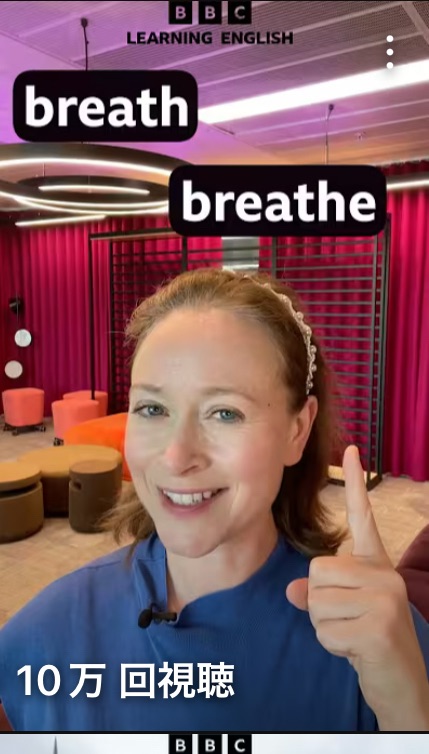
BBC learning English: What’s the difference?
Breath with no e is a noun. The air you take in and out. We use it in phrases like take a breath, hold your breath, out of breath.
We pronounce it with a short vowel sound /e/, and the th is unvoiced.
[bréθ]
Breath with an e is a verb. We breathe when we move air in and out of our lungs.
Breathe in and breathe out.
This time the pronunciation is a long vowel sound. /íː/ The th is voiced.
Breathe.
Breathe.
So here’s a tip.
If you want the verb, you need a long /íː/ sound and an extra e in the spelling.
–
difference /ˈdɪf(ə)rəns/ 違い、差
breath /brɛθ/ 息、呼吸(名詞)
noun /naʊn/ 名詞
air /ɛər/ 空気
take in /teɪk ɪn/ 吸い込む
take a breath /teɪk ə brɛθ/ 息を吸う、一息つく
hold your breath /hoʊld jɔːr brɛθ/ 息を止める、固唾をのむ
out of breath /aʊt əv brɛθ/ 息切れして
short vowel sound /ʃɔːrt ˈvaʊəl saʊnd/ 短母音の音
unvoiced /ˈʌnˌvɔɪst/ 無声音
breathe /briːð/ 息をする(動詞)
verb /vɜːrb/ 動詞
lungs /lʌŋz/ 肺
breathe in /briːð ɪn/ 息を吸う
breathe out /briːð aʊt/ 息を吐く
long vowel sound /lɔːŋ ˈvaʊəl saʊnd/ 長母音の音
voiced /vɔɪst/ 有声音
tip /tɪp/ 助言、ヒント
spelling /ˈspɛlɪŋ/ 綴り、スペル
日本語訳
違いは何ですか?
Breath(eがないもの) は名詞です。つまり、吸ったり吐いたりする空気のことです。
私たちは take a breath(息を吸う)、hold your breath(息を止める)、out of breath(息切れして) などの表現で使います。
このときの発音は短い母音 /e/ で、”th” は無声音です。
[bréθ]
Breathe(eがあるもの) は動詞です。空気を肺に出し入れするときに「息をする」という意味になります。
Breathe in(息を吸う)、breathe out(息を吐く)です。
この場合、発音は長い母音 /íː/ で、”th” は有声音です。
breathe
breathe
ですのでヒントとしては、もし動詞にしたいなら、長い /íː/ の音と綴りに余分な “e” が必要です。


コメント