Campaign for Nobel Peace Prize for Japan Constitution’s Article 9 ends after decade
November 17, 2025 (Mainichi Japan)
SAGAMIHARA, Kanagawa — An executive committee that spent over a decade advocating for war-renouncing Article 9 of Japan’s Constitution to be recognized globally and awarded the Nobel Peace Prize quietly concluded its activities in September.
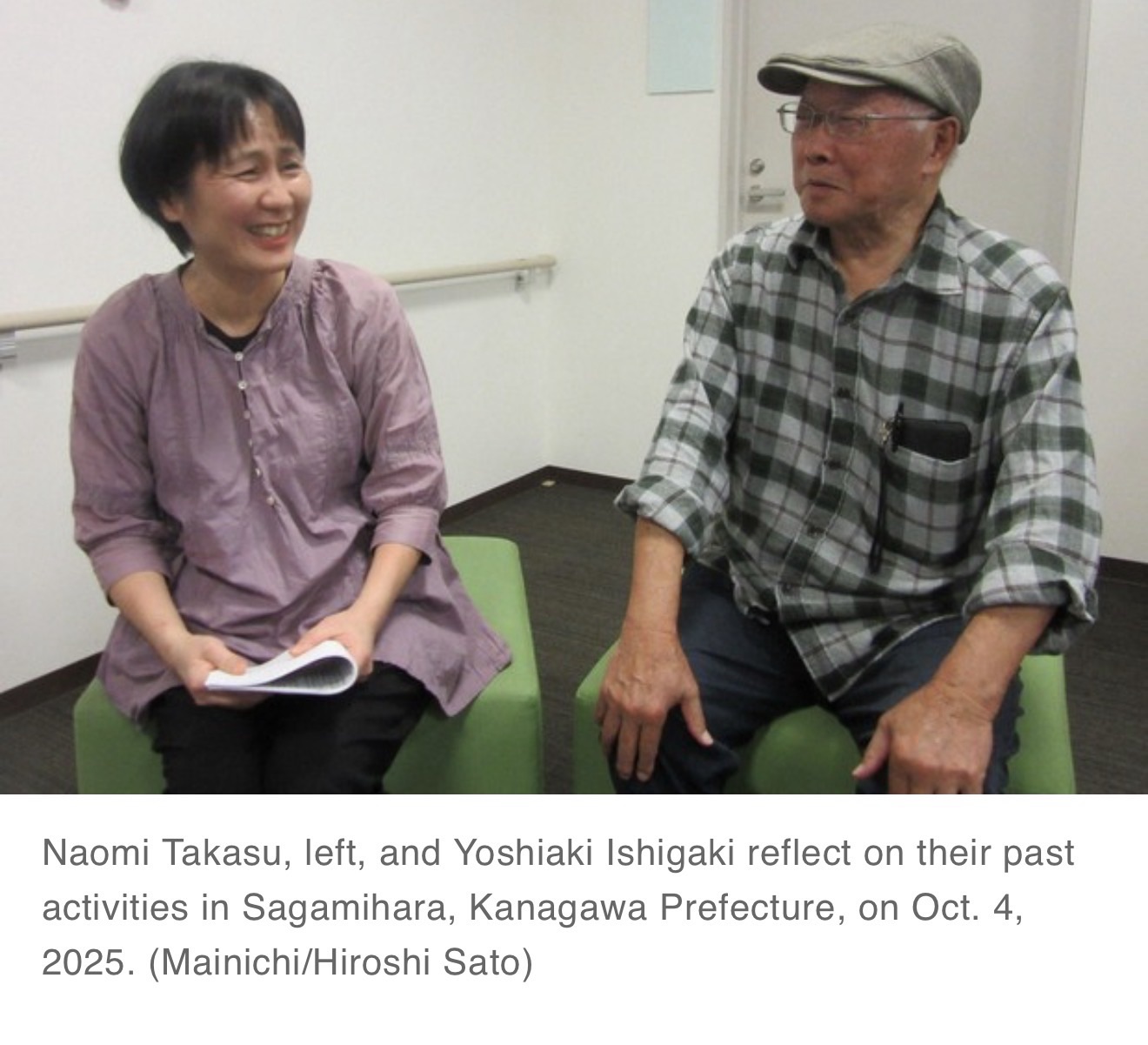
Why did the “Executive Committee for ‘The Nobel Peace Prize for Article 9 of the Japanese Constitution'” decide to end its campaign just before this year’s Nobel Peace Prize announcement on Oct. 10? When a Mainichi Shimbun reporter asked co-heads Naomi Takasu, 48, from Zama, Kanagawa Prefecture, and Yoshiaki Ishigaki, 84, from the prefectural city of Sagamihara, they cited the influence of another organization’s achievements.
Takasu, a housewife and mother of two, first launched the campaign on her own before initiating the committee’s formation. She was inspired by the European Union receiving the peace prize in 2012 and emailed the Nobel Committee in Oslo. She asked them to award the peace prize to Article 9 and launched an online petition.
In response, the Nobel Committee informed her that a nomination by experts is required for entry. Additionally, she learned that the prize is limited to individuals or organizations, excluding “the Constitution” as it does not fit either category. Therefore, she decided to pursue the nomination of “the Japanese people,” who, as “sovereign” according to the Constitution, have continued to uphold Article 9.
Takasu collaborated with three Kanagawa-based groups dedicated to preserving Article 9 and established the executive committee in 2013. Takasu and Ishigaki, a former teacher and organizer of one group, were among the co-heads. They promptly sought the cooperation of individuals who held the qualifications to nominate peace prize candidates.
In April 2014, they received confirmation that their nomination had been accepted, making them a candidate for the first time. The following month, 60 lawmakers from both ruling and opposition parties jointly petitioned the Nobel Committee for the award. They were nominated again in 2015 and 2016, with the momentum growing so strong that the nominators extended beyond national borders to include South Korea and Costa Rica.
The background to this momentum was the intense debate over security legislation in Japan at the time. In July 2014, then Prime Minister Shinzo Abe’s administration approved the right to exercise collective self-defense. Immediately after that, the number of petition signatures surged dramatically.
However, in 2017, it was reported that the Nobel Committee rejected the framework of “the Japanese people” from being eligible for the award. Starting in 2023, the activists changed the award candidates to two domestic organizations that advocate for constitutional preservation. The executive committee members held public viewings each year to watch the peace prize announcement, but good news never came.
With an aging membership, they decided to conclude the petition drive by the end of the 2024 fiscal year. In October of that year, it was announced that the peace prize would go to the Japan Confederation of A- and H-Bomb Sufferers Organizations (Nihon Hidankyo). Takasu recalled, “The members of Nihon Hidankyo are people who raise their voices, saying, ‘stop war.’ They speak for us in front of people around the world. I was so happy I couldn’t stop crying.” Ishigaki added, “Their award resonated with the aspirations we have been pursuing.”
The executive committee interpreted Nihon Hidankyo’s award as fulfilling their role and decided to end their campaign. Although they concluded activities in September, conflicts persist worldwide, such as Russia’s invasion of Ukraine.
Takasu said, “The world is not yet at peace. We each need to do what we should and what we can, starting with what’s around us.” She plans to continue conveying the significance of the Constitution and Article 9 to those around her, especially during elections. “As a parent, it pains me to see children become victims of war overseas. I want to keep praying for peace,” she added.
In September, the executive committee published a statement on their website titled “on ending our campaign.” It read, “Even after the campaign ends, let us pledge to fight for the peace of this country — no, the world — using Article 9 of the Constitution as our weapon.”
The campaign gathered a total of 738,616 signatures. Reflecting on their efforts, Ishigaki proudly stated, “Article 9 is the world’s hope.”
単語 / 熟語 発音記号 意味
executive committee /ɪɡˈzɛkjətɪv kəˈmɪti/ 実行委員会
advocate for /ˈædvəkeɪt fɔːr/ ~を主張する、擁護する
war-renouncing /wɔːr rɪˈnaʊnsɪŋ/ 戦争放棄の
recognize globally /ˈrɛkəgnaɪz ˈgloʊbəli/ 世界的に認める
conclude activities /kənˈkluːd ækˈtɪvətiz/ 活動を終える
influence /ˈɪnfluəns/ 影響(を与える)
achievement /əˈtʃiːvmənt/ 業績、成果
launch a campaign /lɔːntʃ kæmˈpeɪn/ キャンペーンを始める
inspired by /ɪnˈspaɪərd baɪ/ ~に触発される
online petition /ˈpɛˌtɪʃən/ オンライン署名運動
nomination /ˌnɑːməˈneɪʃən/ ノミネート、推薦
sovereign /ˈsɑːvrən/ 主権者
uphold /ʌpˈhoʊld/ 支持する、守る
preserve (the Constitution) /prɪˈzɜːrv/ ~を守る、保存する
confirmation /ˌkɒnfərˈmeɪʃən/ 確認、承認
momentum /moʊˈmɛntəm/ 勢い、推進力
verge of bankruptcy /vɜːrdʒ ʌv ˈbæŋkrʌptsi/ 破産寸前
collective self-defense /kəˈlɛktɪv sɛlf dɪˈfɛns/ 集団的自衛権
surge /sɜːrdʒ/ 急増する
aging membership /ˈeɪdʒɪŋ ˈmɛmbərʃɪp/ 高齢化したメンバー構成
petition drive /pəˈtɪʃən draɪv/ 署名活動
resonate with /ˈrɛzəˌneɪt wɪð/ ~に響く、共鳴する
aspiration /ˌæspəˈreɪʃən/ 志、願望
persist /pərˈsɪst/ 続く、持続する
significance /sɪɡˈnɪfɪkəns/ 意義、重要性
pledge to /plɛdʒ tuː/ ~を誓う
weapon (metaphorical) /ˈwɛpən/ 武器(比喩的な意味)
reflect on /rɪˈflɛkt ɒn/ ~を振り返る
hope (名詞) /hoʊp/ 希望
神奈川県相模原市──
日本国憲法第9条(戦争放棄)が世界的に認められ、ノーベル平和賞を受賞すべきだとして、10年以上活動してきた実行委員会が、今年9月に静かに活動を終了した。
では、なぜ「憲法9条にノーベル平和賞を」実行委員会は、今年の10月10日のノーベル平和賞発表を前に活動を終える決断をしたのか。毎日新聞が共同代表の高須直美さん(48、座間市)と石垣義明さん(84、相模原市)に尋ねると、別の団体の功績の影響を挙げた。
主婦で2児の母である高須さんは、2012年にEUが平和賞を受賞したことに触発され、自らキャンペーンを開始し、後に委員会設立の発起人となった。彼女はオスロのノーベル委員会にメールを送り、憲法9条を受賞対象にするよう求め、オンライン署名を始めた。
しかしノーベル委員会からは、推薦には専門家の指名が必要であること、また憲法は個人や団体ではないため受賞対象外であると知らされた。そこで高須さんは、憲法上の主権者であり、9条を守り続けてきた「日本国民」を候補とする方針にした。
2013年、高須さんは神奈川県内の3団体と協力し、実行委員会を設立。元教師で団体代表の石垣さんらと共同代表になった。彼らはすぐに候補推薦資格を持つ人々の協力を求めた。
2014年4月、彼らの推薦が受理されたことが確認され、初めて正式な候補となった。同年5月には、与野党の国会議員60名が連名でノーベル委員会に嘆願書を提出。2015年、2016年もノミネートが続き、その勢いは韓国やコスタリカの推薦者にも広がった。
この背景には、日本での安全保障法制をめぐる激しい議論があった。2014年7月、安倍政権が集団的自衛権の行使容認を決定すると、署名数は急増した。
しかし2017年、ノーベル委員会は「日本国民」という枠組みを受賞対象として認めない方針を示した。2023年からは、憲法擁護を掲げる国内2団体を候補に切り替えた。委員会は毎年、発表を見守るパブリックビューイングを開いたが、受賞の知らせは届かなかった。
メンバーの高齢化により、2024年度末で署名活動を終了することが決まった。その年の10月、平和賞が日本原水爆被害者団体協議会(日本被団協)に授与されると発表された。高須さんは、「『戦争を止めて』と声を上げる被団協の皆さんは、世界の人々に向けて私たちの思いを代弁してくれる存在。嬉しくて泣き止めませんでした」と語る。石垣さんも、「彼らの受賞は、私たちの願いと重なっている」と述べた。
委員会はこの受賞を、自分たちの役割が果たされた証と受け止め、活動を終了することにした。9月に活動を終えたものの、ウクライナ侵攻など世界の紛争は続いている。
高須さんは、「世界はまだ平和ではありません。自分にできることを、身近なところから始める必要があります」と述べ、選挙などを通じて憲法と9条の意義を伝え続けるつもりだと話した。「親として、海外で子どもたちが戦争の犠牲になるのを見るのはつらい。平和を祈り続けたい」とも語った。
9月、委員会は「活動終了にあたって」という声明をホームページに掲載し、
「キャンペーン終了後も、憲法9条を武器として、この国──いや、世界の平和のために戦い続けよう」
と締めくくった。
最終的に集まった署名は73万8,616筆。石垣さんは振り返り、
「9条は世界の希望です」
と誇らしげに語った。
投稿者プロフィール




コメント