
冬の地震では、寒さや雪が避難を遅らせ、低体温症の危険性を高める。
‘Keep skin covered, stay dry’ during winter evacuations, Japan expert advises
December 12, 2025 (Mainichi Japan)
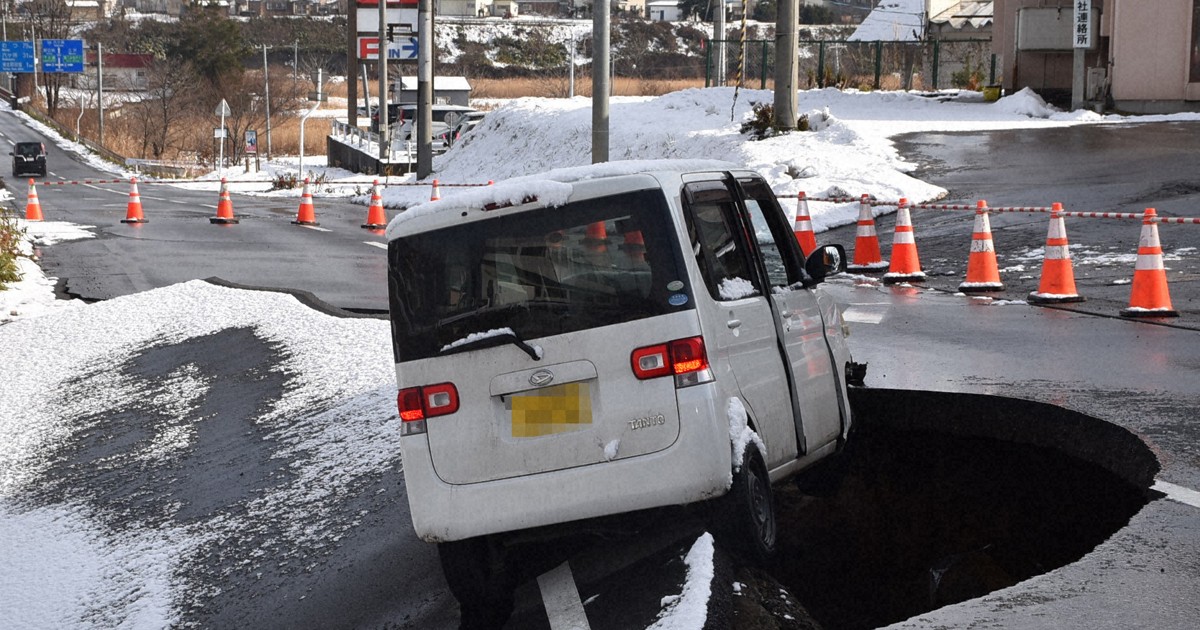
A car that fell in a sinkhole, which opened following an earthquake, is seen in the village of Tohoku, Aomori Prefecture, on Dec. 9, 2025, in this partially modified photo. (Mainichi/Shintaro Matsumoto)
TOKYO — When an earthquake strikes in winter, cold temperatures and snow can slow down evacuations and raise the risk of hypothermia. An expert pointed out the importance of staying dry in rain or snow.
After the earthquake that registered an upper 6 on the Japanese seismic intensity scale of 7 in Aomori Prefecture on Dec. 8, the government issued a “subsequent earthquake advisory” for a possible megaquake off the east coast, from Hokkaido in the north down to the Sanriku coast in the country’s northeast. The likelihood of a major earthquake following the recent tremor along the Japan Trench and Chishima Trench area is apparently higher than usual
The advisory applies to 182 municipalities across seven prefectures, mainly on Japan’s Pacific coast — from Hokkaido to Chiba Prefecture, southeast of Tokyo. It calls on residents to maintain a state of readiness for immediate evacuation and to always carry emergency items, which the government calls “special preparations.” Residents are also advised to take “everyday preparedness” measures, such as securing furniture and checking emergency food supplies. The advisory doesn’t ask for people to evacuate in advance.
Masahiro Nemoto, a professor at the Japanese Red Cross Hokkaido College of Nursing and an expert on disaster preparedness in cold regions, urged people to use their imagination and prepare carefully. Regarding winter evacuations after a disaster, he warned, “Getting your clothes or skin wet can cause body temperature to drop quickly. It’s important to minimize exposed skin by wearing clothing with high water repellency such as rainwear, along with hats and gloves.” He recommended preparing winter equipment “with the idea of adding cold weather gear that covers the entire body in addition to normal winter clothing.”
Nemoto also called on people to prepare items including portable toilets, emergency food, sleeping bags, necessary medication and indoor shoes. For areas at risk of tsunamis, he said, “To evacuate safely without hesitation when every second counts, people should decide on an ordered action plan.”
In the past, large temblors have repeatedly struck along the Japan Trench and Chishima Trench, including the 2011 Great East Japan Earthquake. Government estimates state that if a magnitude 9 level earthquake occurred along the Japan Trench on a winter night, the death toll could reach up to 199,000, and up to 100,000 if along the Chishima Trench. Even among those who managed to evacuate, as many as 42,000 people in the Japan Trench scenario and 22,000 people in the Chishima Trench scenario are projected to require treatment for hypothermia.
However, the government also says that improvements in tsunami awareness and evacuation behavior could reduce the death toll by 80%, and preparing cold weather clothing and heating equipment can reduce the risk of hypothermia.
単語・熟語 発音記号 意味
evacuation /ɪˌvækjuˈeɪʃən/ 避難
sinkhole /ˈsɪŋkˌhoʊl/ 陥没穴
hypothermia /ˌhaɪpoʊˈθɜːrmiə/ 低体温症
seismic intensity /ˈsaɪzmɪk ɪnˈtɛnsɪti/ 震度
subsequent /ˈsʌbsɪkwənt/ その後の
megaquake /ˈmɛɡəˌkweɪk/ 巨大地震
likelihood /ˈlaɪkliˌhʊd/ 可能性
municipality /mjuːˌnɪsɪˈpælɪti/ 自治体
readiness /ˈrɛd.i.nəs/ 準備状態
emergency items /ɪˈmɜːrdʒənsi ˈaɪtəmz/ 緊急時持ち出し品
water repellency /ˈwɔːtər rɪˈpɛlənsi/ 撥水性
repellency /rɪˈpɛlənsi/ 撥水性
gear /ɡɪər/ 装備
hesitation /ˌhɛzɪˈteɪʃən/ ためらい
temblor /ˈtɛmblər/ 地震(地震の別表現)
death toll /ˈdɛθ toʊl/ 死亡者数
awareness /əˈwɛərnəs/ 意識
treatment /ˈtriːtmənt/ 治療
projected /prəˈdʒɛktɪd/ 推計される
reduce /rɪˈduːs/ 減らす
冬の地震では、寒さや雪が避難を遅らせ、低体温症の危険性を高める。
専門家は雨や雪で濡れないことが重要だと指摘している。
12月8日に青森県で震度6強の地震発生後、政府は北海道から三陸海岸にかけて巨大地震の可能性を示す「地震後予測情報」を出した。182市町村が対象で、住民はすぐに避難できる準備と非常持ち出し品の携帯を求められている。
災害看護の専門家・根本教授は、冬の避難では「衣服や肌を濡らさないこと」が重要だとし、撥水性の高い雨具や帽子、手袋などで露出を最小限にすべきだと述べた。また、冬用装備、携帯トイレ、非常食、寝袋、薬、室内履きなどの準備も呼びかけている。
津波の危険地域では、迷わず迅速に避難できる行動計画が必要とされる。
政府の推計によると、冬の夜に日本海溝沿いでM9級地震が発生すれば最大199,000人が死亡する可能性がある。避難できた人でも数万人が低体温症治療を要する可能性がある。
しかし、津波への意識向上と避難行動の改善により死亡者を80%減らせるとされ、冬の防寒装備の準備も低体温症リスクを減らす。
– 語彙クイズ(10問)
Q1. “evacuation” の意味は?
a) 建設
b) 避難
c) 訓練
Q2. “hypothermia” はどれ?
a) 熱中症
b) 感染症
c) 低体温症
Q3. “likelihood” の意味は?
a) 習慣
b) 可能性
c) 難易度
Q4. “repellency” の最も近い意味は?
a) 吸収性
b) 撥水性
c) 柔軟性
Q5. “gear” の意味
a) 装備
b) 地震計
c) 警告音
Q6. “municipality” の意味
a) 都市国家
b) 自治体
c) 住民税
Q7. “death toll” の意味
a) 死亡者数
b) 緊急連絡先
c) 警報レベル
Q8. “treatment” の意味
a) 薬剤
b) 治療
c) 症状
Q9. “awareness” の意味
a) 関心
b) 意識
c) 予測
Q10. “hesitation” の意味
a) ためらい
b) 批判
c) 負担
TOEIC形式問題(5問)
Q1. The government advised residents to remain in a state of ______ for immediate evacuation.
a) readiness
b) creation
c) hesitation
d) movement
Q2. Winter conditions can slow down evacuation and ______ the risk of hypothermia.
a) reduce
b) raise
c) delete
d) protect
Q3. Residents are encouraged to carry emergency items, often called “special ______.”
a) repairs
b) preparations
c) corrections
d) actions
Q4. The professor recommended wearing clothing with high water ______.
a) resistance
b) importance
c) repellency
d) tendency
Q5. Improvements in tsunami awareness could ______ the death toll by 80%.
a) imagine
b) observe
c) reduce
d) require
読解問題(3問・英語)
Q1. Why is staying dry important during winter evacuations?
Q2. What items did Professor Nemoto recommend preparing besides winter clothing?
Q3. According to government estimates, how can the death toll be reduced?
-解答
語彙クイズ
1-b / 2-c / 3-b / 4-b / 5-a
6-b / 7-a / 8-b / 9-b / 10-a
TOEIC形式
1-a / 2-b / 3-b / 4-c / 5-c
読解問題
Because wet clothing or skin causes body temperature to drop quickly, increasing hypothermia risk.
Portable toilets, emergency food, sleeping bags, medication, indoor shoes, etc.
By improving tsunami awareness and evacuation behavior.
投稿者プロフィール


コメント