BBC learning English: ‘resign’, ‘retire’, ‘make redundant’ and ‘be sacked’ – what’s the difference?
youtube-shorts
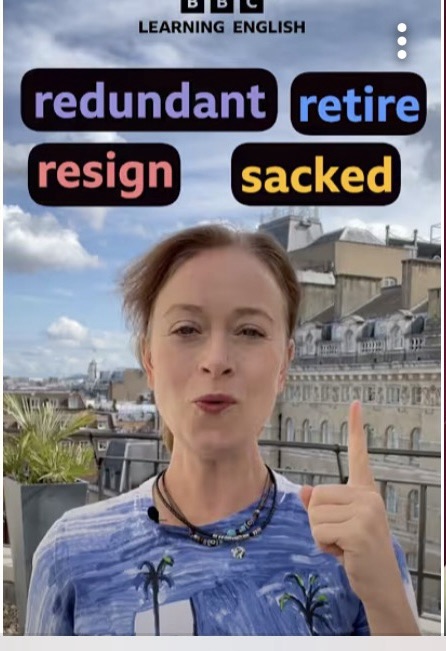
'resign', 'retire', 'make redundant' and 'be sacked' - what's the difference?

These are all ways to talk about leaving your job but what's the difference?
You resign or quit when you decide to leave your job, maybe because you have another one.
I'm going to resign for my job and become a cake maker.
You retire when you leave your job because of your age or health.
My parents retired in their 60s and now they're traveling the world.
If you are fired or sacked, you are forced to leave your job because you did something wrong or you did your job badly.
I've been sacked from my job as a cake maker.
Apparently, my cakes are not very good.
If you're made redundant, you're also forced to leave your job but this time it's not because you did something wrong.  Maybe the company is closing or can't afford to pay you anymore.
We've all been made redundant. Apparently, the company's closing down.
Note, the first two are in the active form because you decide to leave.
The second two are more commonly used in the passive because someone makes you leave. The action is done to you. Now fill in the gap with the correct word.
Jo was (  ) from her job for stealing.

-
resign	/rɪˈzaɪn/	辞職する
quit	/kwɪt/	(仕事を)辞める
retire	/rɪˈtaɪər/	退職する、引退する
make redundant	/meɪk rɪˈdʌndənt/	人員整理で解雇する
be made redundant	/biː meɪd rɪˈdʌndənt/	人員整理で解雇される
be sacked	/biː sækt/	解雇される(主に英)
be fired	/biː ˈfaɪərd/	解雇される(主に米)
decide to ~	/dɪˈsaɪd/	~することを決める
because of	/bɪˈkɔːz əv/	~が理由で
force	/fɔːrs/	強制する
do something wrong	/rɔːŋ/	何か悪いことをする
afford to ~	/əˈfɔːrd/	~する余裕がある
closing down	/ˈkloʊzɪŋ daʊn/	閉鎖する
apparently	/əˈpærəntli/	どうやら
active form	/ˈæktɪv fɔːrm/	能動態
passive (form)	/ˈpæsɪv/	受動態
fill in the gap	/fɪl ɪn/	空欄を埋める
steal / stealing	/stiːl/	盗む/盗み


「resign」「retire」「make redundant」「be sacked」―その違いは?
これらはすべて「仕事を辞める」ことを表す言い方ですが、違いは何でしょうか。
resign や quit は、自分の意思で仕事を辞めるときに使います。たとえば、別の仕事が決まった場合などです。
「私は今の仕事を辞めて、ケーキ職人になります。」
retire は、年齢や健康上の理由で仕事を辞めるときに使います。
「私の両親は60代で退職し、今は世界中を旅行しています。」
be fired や be sacked は、何か悪いことをしたり、仕事ぶりが悪かったりしたために、強制的に仕事を辞めさせられる場合です。
「私はケーキ職人の仕事をクビになりました。」
「どうやら、私のケーキはあまりおいしくなかったようです。」
be made redundant も強制的に仕事を辞めさせられる点では同じですが、こちらは本人に非がない場合に使われます。たとえば、会社が閉鎖したり、給料を払う余裕がなくなった場合です。
「私たちは全員、人員整理で解雇されました。どうやら会社が閉鎖するようです。」
なお、最初の2つは「自分で辞める」ため、能動態で使われます。
後の2つは「誰かに辞めさせられる」ため、受動態で使われることが多い表現です。行為は自分ではなく、他者によって行われます。
それでは、正しい語を選んで空欄を埋めてください。
Jo was (  ) from her job for stealing.
(ジョーは盗みをしたため、仕事を___。)
 youtube-shorts

コメント