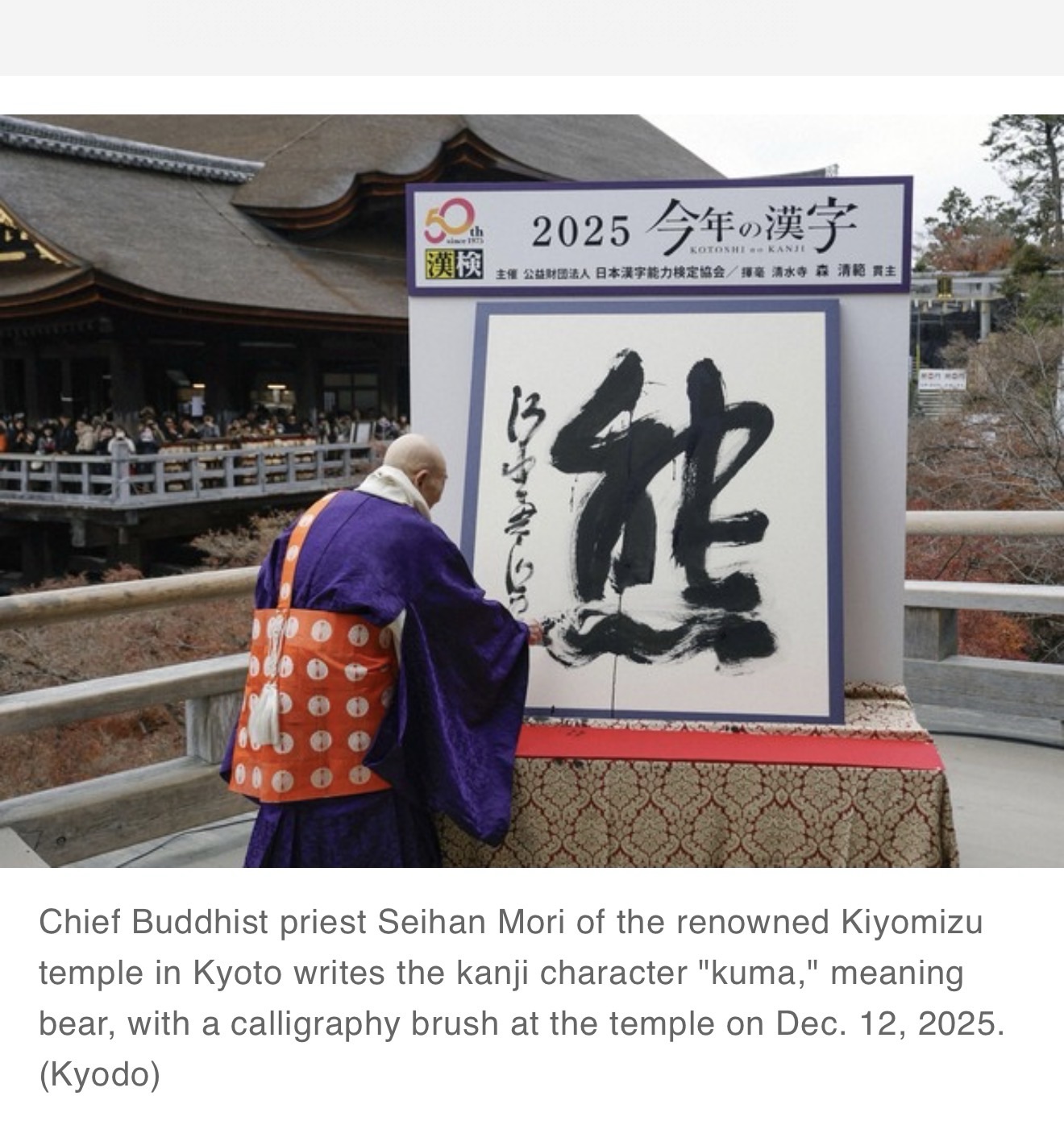
2025年の「今年の漢字」として「熊」が選ばれた。
Kanji for ‘bear’ picked to mark 2025 representing bear attacks and panda
December 12, 2025 (Mainichi Japan)
https://mainichi.jp/english/articles/20251212/p2g/00m/0na/048000c
KYOTO (Kyodo) — The kanji for “kuma,” meaning bear, was picked as the single most representative Chinese character corresponding to the social mood in Japan this year, a Kyoto-based organization said Friday.
The selection was made in response to a huge spike in bear attacks nationwide. It also reflected public attention on pandas, written using the kanji for bear combined with that for cat, with this year seeing four pandas on loan to a zoo in western Japan returned to China, leaving only two in the country.
Out of 189,122 total entries, 23,346 votes went to “kuma,” marking the character’s first-ever selection in the 31st annual poll run by the Japan Kanji Aptitude Testing Foundation, which gathers votes from the public via its website and postcards.
The kanji was written with a giant calligraphy brush on a roughly 1.5 meters high and 1.3 meters wide sheet of “washi,” traditional Japanese handmade paper, by chief Buddhist priest Seihan Mori of the renowned Kiyomizu temple in Kyoto.
Against the backdrop of a year that saw frequent bear incursions into populated areas, which led to event cancellations and school closures, Mori said, “I pray for the victims to rest in peace. I think this serves as a reminder that we need to seriously consider the problems arising from changes in the environment.”
Trailing in second place by 180 votes was the kanji for “kome,” meaning rice, citing a surge in prices of the staple food and the second inauguration of U.S. President Donald Trump, as the name of the United States combines the kanji for rice and nation.
Third place was secured by the kanji for “taka,” meaning high, representing elevated prices as well as Japan’s first female prime minister, Sanae Takaichi, whose surname begins with this character.
Last year, the kanji “kin,” also read “kane” and meaning gold or money, was selected, reflecting both the gold medals won by Japanese athletes at the Paris Olympics and Paralympics and money-related issues such as political funding scandals.
–
単語・熟語 発音記号 意味
kanji /ˈkɑːn-dʒi/ 漢字
representative /ˌrɛprɪˈzɛntətɪv/ 象徴的な、代表的な
social mood /ˈsoʊʃəl muːd/ 社会の雰囲気
spike /spaɪk/ 急増
nationwide /ˌneɪʃənˈwaɪd/ 全国的に
public attention /ˈpʌblɪk əˈtɛnʃən/ 世間の注目
on loan /ɑn loʊn/ 貸与されて
entry (vote) /ˈɛntri/ 投票、応募
annual poll /ˈænjuəl poʊl/ 年次投票
aptitude /ˈæptɪˌtuːd/ 能力、適性
foundation /faʊnˈdeɪʃən/ 財団
gather /ˈɡæðər/ 集める
washi /ˈwɑːʃi/ 和紙
handmade /ˈhændˌmeɪd/ 手作りの
backdrop /ˈbækˌdrɑp/ 背景
incursion /ɪnˈkɜːrʒən/ 侵入
populated area /ˈpɒpjəˌleɪtɪd ˈɛəriə/ 人口の多い地域
closure /ˈkloʊʒər/ 閉鎖
reminder /rɪˈmaɪndər/ 注意喚起するもの
surge /sɜːrdʒ/ 急騰
inauguration /ɪˌnɔːɡjəˈreɪʃən/ 就任
staple food /ˈsteɪpəl fuːd/ 主食
elevated /ˈɛləˌveɪtɪd/ 高騰した、上昇した
scandal /ˈskændəl/ スキャンダル
2025年の「今年の漢字」として「熊」が選ばれた。これは全国的な熊被害の急増に加え、西日本の動物園から4頭のパンダが中国へ返還され、国内に残るパンダが2頭だけになったことなど、人々の関心を反映している。
応募総数18万9,122件のうち、「熊」は2万3,346票を獲得し、創設以来31回目の投票で初の選出となった。
漢字は京都・清水寺の森清範貫主が、高さ1.5メートル、幅1.3メートルの和紙に巨大な筆で書いた。
今年は人が住む地域への熊の度重なる侵入が背景にあり、イベントの中止や学校閉鎖も起きた。森貫主は「被害者のご冥福を祈るとともに、環境変化による問題を真剣に考える必要があることを思い出させる」と述べた。
2位は「米」。物価高騰や、米国(=「米国」の「米」)のトランプ大統領の再就任が理由。
3位は「高」。物価上昇や日本初の女性首相・高市氏の姓の頭文字が理由である。
昨年は「金」が選ばれ、日本人選手のパリ五輪での金メダル獲得や、政治資金問題など「金(かね)」に関する出来事が反映された。
語彙クイズ 10問
Q1. “spike” の意味は?
a) 減少 b) 急増 c) 調査
Q2. “representative” に最も近い意味は?
a) 象徴的な b) 不確かな c) 批判的な
Q3. “incursion” の意味は?
a) 侵入 b) 休止 c) 交渉
Q4. “annual poll” の意味は?
a) 年次投票 b) 速報 c) 監督
Q5. “public attention” の意味は?
a) 公衆批判 b) 世間の注目 c) 公的援助
Q6. “inauguration” の意味は?
a) 任期満了 b) 就任 c) 退任
Q7. “surge” の意味は?
a) 急騰 b) 弱体化 c) 分析
Q8. “closure” の意味は?
a) 競争 b) 閉鎖 c) 故障
Q9. “reminder” の意味は?
a) 証拠 b) 警告・注意喚起 c) 結果
Q10. “elevated” の意味は?
a) 安定した b) 高騰した c) 不足した
TOEIC形式問題(5問)
Q1. The character was selected in response to a ______ in bear attacks.
a) decline
b) spike
c) failure
d) rumor
Q2. The organization ______ votes from the public through its website.
a) abandons
b) gathers
c) erases
d) limits
Q3. Bear incursions into populated areas led to event ______.
a) cancellations
b) decorations
c) celebrations
d) promotions
Q4. Rising rice prices were a major factor ______ the kanji “kome.”
a) beyond
b) behind
c) across
d) above
Q5. Last year’s kanji represented gold medals and money-related ______.
a) scandals
b) landmarks
c) festivals
d) audiences
読解問題(英語・3問)
Q1. Why was the kanji for “bear” selected this year?
Q2. What symbolic meaning did the kanji “kome” carry in the poll?
Q3. What common theme connected last year’s kanji “kin”?
-解答
語彙クイズ
1-b / 2-a / 3-a / 4-a / 5-b
6-b / 7-a / 8-b / 9-b / 10-b
TOEIC
1-b / 2-b / 3-a / 4-b / 5-a
読解問題(サンプル答案)
Q1. Because of a large increase in bear attacks and increased attention on pandas.
Q2. It represented rising rice prices and the U.S. (“米国”).
Q3. It related to both gold medals and money-related issues.

コメント